
The lid fell off the salt shaker. Or you added a stock cube, then soy sauce, then forgot you already salted the water. Either way, you take a bite and your face says it all.
Good news: most over-salted food can be saved in a few minutes, and you don’t need chef skills to do it. Here’s what actually works, plus one famous “trick” you can safely skip.
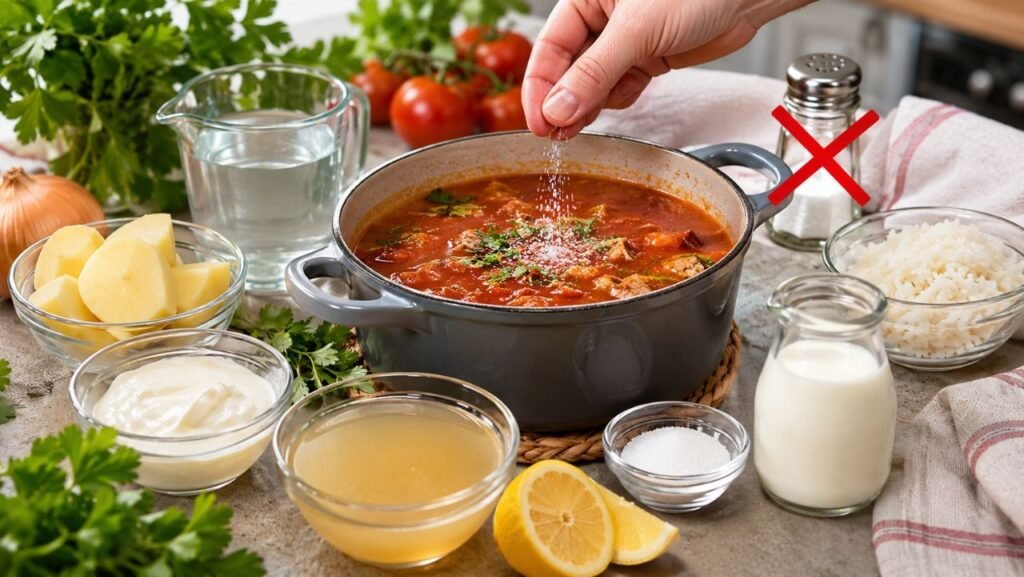
Quick answer: make more of the dish with unsalted ingredients, add a squeeze of acid, stir in something creamy, or serve it with something plain. Pick the one that fits your dish and you’re done.
First, Taste Again (Calmly)
Take a small spoonful and let it cool for a few seconds. Is it a bit too salty or really too salty? A little too salty usually needs one quick fix from tips 3 to 6. Really salty needs you to add more food (tips 1 and 2).

1. Make More of It
This is the most reliable fix for soups, stews, sauces and curries. Add unsalted broth, water, crushed tomatoes or coconut milk, then taste again. You may need to add a little more of your other spices so the flavor doesn’t get watery.
Multicooker tip: add the extra liquid and let it run for a few more minutes. It does the stirring and waiting for you.
Some links below are affiliate links. As an Amazon Associate I earn from qualifying purchases.


2. Add More Bulk
Stir in extra unsalted vegetables, rinsed canned beans, or plain cooked rice, pasta, lentils or potatoes. The same amount of salt now spreads over more food. Bonus: you get leftovers for the freezer.
3. Add a Squeeze of Acid
Lemon juice, lime juice or a splash of vinegar won’t remove salt, but it changes how salty the dish tastes. Start with a teaspoon, stir, and taste. Works great for soups, sauces, dressings and stir-fries.
4. Bring In Something Creamy
Cream, unsalted butter, plain yogurt, sour cream, avocado or a drizzle of olive oil all soften the salty edge. Perfect for sauces, curries and creamy soups.
5. Add a Tiny Pinch of Sweetness
A pinch of sugar or a drop of honey can balance an over-salted tomato sauce or stir-fry. Tiny is the key word here. You want balance, not dessert.
6. Serve It With Something Plain
The laziest fix of all: don’t fix the dish, fix the plate. Serve it with unsalted rice, plain pasta, bread, boiled potatoes or a simple green salad. Each bite balances itself out.
7. Soak or Rinse Salty Ingredients
Bacon, ham, salted fish, feta, olives and capers can be soaked in cold water for 10 to 30 minutes before you use them. Canned beans and vegetables get a quick rinse. This one works best before cooking, so keep it in mind for next time.
8. Rescue Over-Salted Meat
Slice it thin and serve it with an unsalted sauce, or shred it into something bigger: a salad, wraps, a soup or a grain bowl with plain ingredients. Air-fried chicken that came out too salty makes a great topping for a big green salad with a creamy, unsalted dressing.
9. Turn It Into Something New
Too-salty rice becomes fried rice with plain vegetables and egg. Too-salty soup becomes the base of a bigger stew. Too-salty roasted vegetables get blended into a soup with unsalted broth. Nobody needs to know it started as a rescue mission.
Myth Check: Does a Raw Potato Absorb the Salt?
You’ve probably heard this one: drop a raw potato into a salty soup and it will soak up the salt. The logic doesn’t hold up. The potato absorbs some liquid, but that liquid is just as salty as the rest of the soup, so what’s left in the pot is about as salty as before.
What does help is adding potatoes (or any plain starch) to the dish and leaving them in, which is simply tip 2.
Let AI Make You a Rescue Plan
When I’m not sure what to do, I ask AI. Try a prompt like this:
“My [dish] is too salty. I have [list what’s in your fridge and pantry]. Give me 3 quick ways to fix it without starting over.”
You get ideas that fit what you actually have at home, in seconds.
How to Avoid It Next Time
- Add salt near the end, especially in soups and sauces that simmer for a long time. The liquid evaporates, the salt stays.
- Watch out for hidden salt in stock cubes, soy sauce, cheese, cured meats and store-bought sauces.
- Use low-sodium broth, so you’re the one deciding how salty it gets.
- Taste as you go. Ten seconds of tasting saves ten minutes of rescuing.
Over-salting isn’t a kitchen fail. It’s just another Food Rescue moment. Save this guide for the next time the salt shaker wins.
Get the Lazy Kitchen Rescue Kit
3 cheat sheets for your fridge: quick fixes for kitchen fails, air fryer times and temps, and emergency ingredient swaps. Free, straight to your inbox.


[…] but that liquid is just as salty as the rest of the soup. If your dish is too salty, check out our Food Rescue tips for fixes that actually […]
[…] Bulk it up with something unsalted, add a squeeze of lemon, or stir in something creamy. We have a whole guide on fixing food that’s too salty. […]
[…] Too salty? Add unsalted broth, a squeeze of lemon or something creamy. Here’s our full guide to fixing salty food. […]